
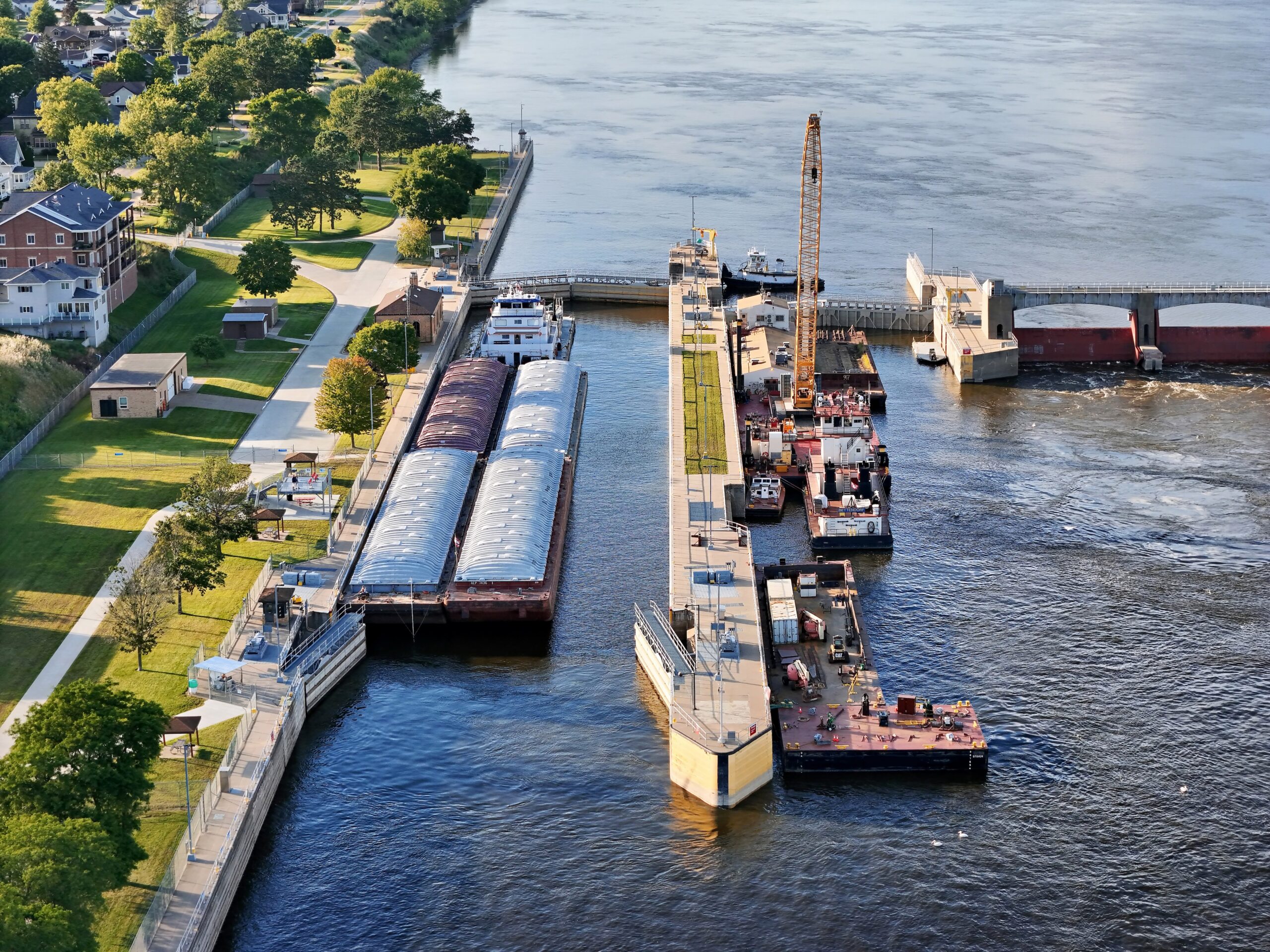
UMWA secretary gives deeper look on USACE staff shortages on locks and dams on Mississippi River
By Brandon Phillips, UMWA Secretary
Recent announcements regarding staffing shortages and operational changes at Locks and Dams 14 and 15 have created understandable frustration among recreational boaters throughout the Upper Mississippi River region.
As both a professional mariner and a recreational river user myself, I understand those frustrations. The Upper Mississippi River is one of the best recreational boating rivers in the country. Our river communities, marinas, campgrounds, bait shops, restaurants and local economies all benefit tremendously from recreational boating activity. In fact, many of us in the towing industry regularly point to the abundance of recreational users on the Upper Mississippi as something unique and positive compared to many other river systems around the country.
But there is also an important piece of the story many recreational users may not fully realize.
The lock and dam system they enjoy today was built primarily to support commercial navigation. The stable pools, reliable navigation depths, marina access and boating conditions that make the Upper Mississippi such an attractive recreational river are largely a byproduct of infrastructure originally developed to move commerce efficiently through the heart of America.
Before the lock and dam system was constructed, portions of the Upper Mississippi during low-water periods could become extremely shallow and difficult to navigate. Historical river conditions in the early 1900s often looked very different than what modern boaters experience today.
Commercial navigation is what justified the creation and continued maintenance of this system, but today both commercial and recreational users benefit from it enormously.
That is why the current staffing concerns matter to everyone.
At this point, the commercial towing industry has not experienced major operational disruptions from the staffing shortages. However, there is growing concern that delays could become significantly worse as the navigation season progresses, especially during fall harvest, when commercial traffic increases dramatically.
The challenge is that solutions take time.
Training and onboarding a lock operator can take close to 90 days. With summer approaching quickly, delays in hiring now could impact the system well into the busiest portion of the navigation season.
There are also legitimate safety concerns associated with increased congestion and extended wait times near lock approaches. Towboats operating near lock structures often have limited maneuverability, and crowded approaches can create hazardous situations for both recreational and commercial vessels.
This is not a “towboats versus recreational boaters” issue. Both groups depend on a safe, reliable, and properly staffed river system.
If there is one thing everyone who uses the river can agree on, it is that the Upper Mississippi River is incredibly valuable – economically, recreationally and culturally.
That is why now is the time for river users of all kinds to contact their elected officials and express support for adequate staffing and investment in the inland waterways system before these problems become significantly worse later in the season.